Food security has ever remained a priority concern in India, and Karnataka is no different. Repetitive droughts, water shortages, and soil erosion pose challenges to smallholder farmers who primarily rely on rain-fed agriculture. In the framework of the United Nations Sustainable Development Goals (SDGs), specifically Goal 2 (Zero Hunger) and Goal 6 (Clean Water and Sanitation), sustainable agriculture practice is a major solution to obtaining food security and environmental sustainability in the state.
Comprehending the Challenge
Food security requires assured access to adequate, safe, and nutritious food at all times. India remains highly insecure for food despite the progress achieved, with approximately 190 million being malnourished, of which millions are underweight and stunted children (FAO, 2018). Smallholder farmers, who constitute almost 86% of India’s agricultural population, are especially vulnerable. Shortage of irrigation, high reliance on chemical fertilizers and pesticides, and low income make them vulnerable to climate change and water shortage.
Historically, the Green Revolution had increased yields hugely but had also led to soil erosion, water resource overuse, and ecological degradation. Farmers in Karnataka are especially vulnerable to these threats, demanding innovative approaches that integrate productivity and environmental protection.
Role of Sustainable Agriculture
Sustainable agriculture is essential in ensuring improved food security. Diversification of crops, growing drought-resistant millets, organic cultivation, and agroforestry have registered incredible dividends in Karnataka. These measures:
Improve soil quality and limit reliance on chemical fertilizers.
Increase nutritional content of crops, fighting malnutrition.
Make climate resilient, safeguarding crops from unpredictable rain and heatwaves.
Open up supplementary incomes with agroforestry products such as wood and fruits.
Government initiatives like the National Mission on Sustainable Agriculture (NMSA) enable these by offering technical support, incentives, and encouraging eco-friendly practices.
Sustainable Water Management
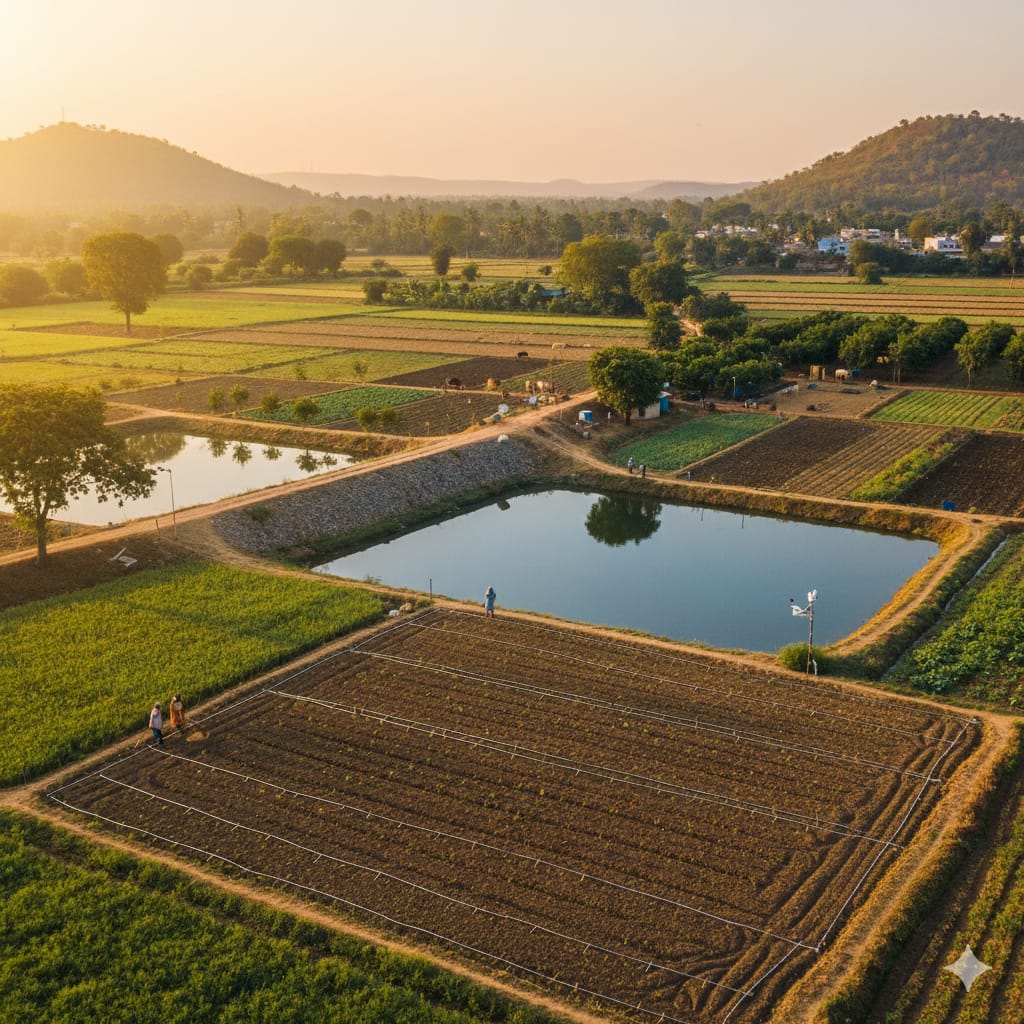
Water shortage is a chronic problem in Karnataka, and thus sustainable management of water is essential. Drip and sprinkler irrigation technologies, rainwater harvesting, and watershed development schemes have been introduced to utilize water optimally. Major programs are:
Krishi Bhagya Scheme: Encourages farm ponds and micro-irrigation for water conservation in dryland agriculture regions.
Pradhan Mantri Krishi Sinchayee Yojana (PMKSY): Increases irrigation coverage while promoting water use efficiency.
Sustainable water use not only ensures water for farming but also saves it for household use and keeps ecosystems healthy. Organic farming also cuts down water pollution by minimizing toxic chemical runoff.
Barriers to Adoption
Progress notwithstanding, small-scale farmers encounter a number of barriers to expanding sustainable agriculture and water management:
Low levels of awareness and knowledge gaps regarding environmentally friendly practices.
High up-front costs for technologies such as drip irrigation and organic agriculture.
Limited infrastructure such as storage, irrigation, and supply of organic inputs.
Bureaucratic delays and a lack of monitoring in policy implementation.
Market access and price instability for sustainable produce.
Climate risks such as uncertain rainfall and temperature variability.
Social and cultural resistance, e.g., to changing ways of farming.
Fragmented ownership, which prevents communal water management and irrigation.
Recommendations for Karnataka
To address these challenges, a multi-pronged approach is needed:
Raise Farmer Awareness: Organize workshops, extension activities, and outreach to train farmers in sustainable agriculture.
Increase Financial Support: Extend low-interest credits, subsidies, and incentives for green technology.
Enhance Infrastructure: Develop robust supply chains for organic inputs, storage, and irrigation.
Strengthen Policy Implementation: Simplify administrative procedures, increase monitoring, and harmonize central and state schemes.
Develop Market Linkages: Establish stable markets for sustainable produce through MSPs, public-private partnerships, and value chain development.
Conclusion
Sustainable agriculture and effective water management are necessary for Karnataka to attain food security, economic stability, and environmental sustainability. All these practices of drought-resistant crop, organic farming, drip irrigation, rainwater harvesting, and agroforestry enhance crop productivity, improve nutrition, save water, and save the environment.
By bridging awareness gaps, financial limitations, infrastructural constraints, policy hurdles, and market access issues, Karnataka can upscale these sustainable approaches efficiently. The state can gain long-term food and water security for its farmers with proper support and initiatives, which will go a long way in achieving SDG 2 (Zero Hunger) and SDG 6 (Clean Water and Sanitation).
Karnataka’s journey offers a model for other regions facing similar agricultural and environmental challenges—demonstrating that sustainable practices can ensure a resilient, food-secure future for all.